
ANNOUNCEMENTS

ACHIEVEMENTS what CBCRA do in the community
BECOME A MEMBER and raise the level of community spirit
SEND US your suggestions and comments
READ MORE about City of Cape Town’s activities & policies
FAULT REPORT system introduced by the City Council
VISIT Property Valuations for more details about your CV22

Friday, 3 March 2017

The DA should take responsibility for Water Crisis


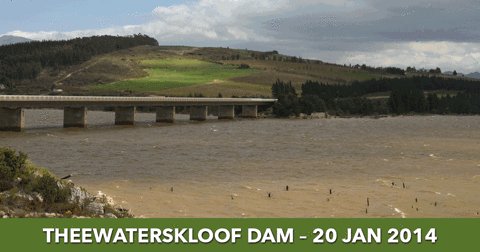
South Africans have been a little obsessed with the weather lately, and for good reason. We've been experiencing a drought for the past two years. But while Gauteng seems to be in the clear (for now) – the Vaal Dam is filled to capacity – following the abundance of rainfall over the past couple of weeks, the Western Cape – and the City of Cape Town in particular – remains thirsty.
In the Western Cape, dam levels are sitting at 31%, havingdropped by 1.6% in one week. With the rainy season far away and only 120 days of water left, the situation in Cape Town looks dire.  Since October last year, there have been strict water restrictions where metros across the country. To date, Cape Town has not adhered to its target of using 700 million litres per day. The city’s current usage is 837 million litres per day.
It's important to look at the situation critically and ask if it could have been managed better to mitigate its effects because the worst thing about the impending water crisis is that the poor will suffer the most.
Embedded video
Naming and shaming campaign backfires
One of the actions taken to address the water crisis in Cape Town was a name and shame campaign. The DA-run City of Cape Town revealed the top 100 water guzzlers on Monday. In the top 10, is a number of wealthy areas like Constantia, Bishop's Court, and Tokai. These are likely people who have sprawling lawns and big, blue swimming pools to fill with the earth's most precious resource.
Upon further investigation, it appeared that some of the consumers on the list had serious leakages. The number one consumer of water in Crawford was billed for over 700 000 litres in a month. That amount of water is enough to fill 10 average-sized swimming pools. It was revealed that two elderly people lived in this residence which had neither a garden nor a pool. Instead, a water pipe had burst last month and this reflected on the bill.
But second on the list was a location in Manenberg – one of Cape Town's poorer communities. Manenberg has no sprawling lawns or pools either. What Manenberg does have is leaking pipes. The resident who lived at the address, Martha Thuysma, 64, told The Daily Voice that her water meter is so faulty she turns her water off to stop her house from flooding.

Sasol's manager of sustainable water, Andries Meyer, said local municipalities are losing almost half of their water in leakages because their infrastructure is old and badly maintained. This means that water losses are as high as 30% to 60%.
In his radio show on Thursday, Heart FM radio presenter Aden Thomas criticised the name-and-shame campaign as œdisingenuous. He said the list did not provide water consumers with any context – what the normal level of consumption is or even action taken by authorities to correct the situation. Thomas said he was disappointed with the City's response because he feels that they should have gone above and beyond. He questioned whether it had done everything, whether it had prioritised the accounts of those who had been using exorbitant amounts of water.

Why so slow to fix the problems?
There should be greater urgency in dealing with the matter. Even if it was just one leak, considering that it is impossible to manufacture water, it needs to be prioritised and dealt with. Apart from the situation falling on the shoulders of Mother Nature, there is a service delivery issue here. Worse is that the poor will suffer – and that is just symptomatic of ongoing DA policy.
Capetonians are recycling their bathwater and using it to top up their toilet systems, water their pot plants or their gardens. Has the City taken into account how abnormal the situation is and done everything to address it?
According to a report by EWN, municipal officers are engaging with Cape Town's top water users. According to the City of Cape Town, none of the residents had reported any water leakages. But that excuse simply is not good enough. When data shows that a single residence is using enough water to fill up to ten swimming pools, the City needs to take the issue more seriously. Regional head at the Water and Sanitation Department, Rashid Khan, was also baffled by the City's approach. It cost a lot of money to reduce wastage, but it doesn't take away from the manager’s going to water users to find out what's going on, he said.
What's worse is that the DA is always bragging about how well-run their metros are. In their vision, they say, Where we govern, we have delivered the country's best performance scores in education, health, service delivery and clean governance.
Pull yourself together, City of Cape Town
This speaks to how the DA runs the Cape Town metro in general. The party's past actions would suggest that it prioritises the needs of the rich over the needs of the poor. We see that with the gentrification of spaces like Woodstock, Observatory, Salt River, and Zonnebloem, where poor folk are evicted to create larney spaces for the rich to sip on superfood smoothies and buy artisan bread. It's similar with the Cape Town deployment of police; there is a greater police presence in Camps Bay than in Nyanga and Khayelitsha.
It is imperative that the City of Cape Town does more to address the water crisis. Who is going to suffer when the water runs out? While the rich will be rushing to the nearest Woolworths to get a five-litre bottle of water, it is the poor that will remain landless – and now waterless.
 Featured image via Pixabay


By 
Shaazia Ebrahim
https://www.thedailyvox.co.za/the-da-should-take-responsibility-for-cape-towns-water-crisis-shaazia-ebrahim/

Thursday, 2 March 2017

Improve traffic in Camps Bay

Al Fresco Dining overlooking Camps Bay Beach.

For many years now, I have thought that Camps Bay beachfront area is in a steady state of slow decline, notwithstanding some of the initiatives of continuous improvement a paradox, indeed.
I commute twice daily through Camps Bay, stopping for coffees in the morning, and eating at a Camps Bay restaurant two or three times a week on the way home.
The sidewalk vendors, selling curios and ice creams are a definite plus for the vibe, especially as far as tourists are concerned. However, the vendors cars – six on average measured on four consecutive days – are parked alongside the vendors’ display area, blocking off a potential parking bay for 12 plus hours every day.
The cars are no doubt used to transport the wares to/from the sidewalk area, but why not then enforce the parking of cars behind the sports fields, and they can then return to load the stock later?
On another tack, I have a suggestion for traffic flow improvement, and for a minor change to MyCiTi bus stop locations.
In the past 10 years or so, I have noticed an exponential hindrance in traffic flow; originally in the “high peak” summer months, but now it seems way more year-around.
The MyCiTi buses do an excellent job, yet there are incremental improvements they could make to minimise traffic hindrance.
I am an unabashed fan of the MyCiTi bus service; I have blogged “live” from a bus for a group of cyclists and motorbikes, following the launch of MyCiTi, have commuted to/from work with it on 30 or 40 occasions, have transported a bicycle – by necessity – on the bus outside of peak hours (brilliant), and think very highly of the service indeed. Well done Cape Town – a real asset to the City of Cape Town.
There are, however, some minor improvements which could, in my opinion, make a major difference to the smooth running of the service. MyCiTi opted for the “in-traffic” stop method, whereby the bus does not pull off the road, but stops in the traffic flow, loads/unloads passengers, and then continues on its way. This method prevents the buses having to re-enter traffic flow, and thus be held hostage by impatient car drivers not letting the bus back in.
The problem it causes is that another MyCiTi bus is being forced over the double white line in order to pass another bus.
The sheer number of buses waiting to collect passengers (enforced waiting for scheduling purposes) puts a lot of load of the traffic infrastructure, and significantly adds to congestion. Buses with a 5 to 10 minute wait at a stop – say Camps Bay – will idle for those 5 to 10 minutes, doors open; even in cooler, winter conditions. Could the bus engine not be switched off to mitigate unnecessary pollution? This is my experience while onboard the bus, not as an observer.
Again, in Camps Bay, they have situated a bus stop (Glen Beach) on a narrow, curving part of Victoria Road, when just 10 metres earlier, sufficient space exists for the bus stop – this would enable cars to still pass the bus when it “pulls in”, but is way safer than the existing situation of a bus stop on curved road after a 1km straight.
The bus stop at Bakoven outbound from Cape Town, is again, situated on a fairly dangerous bend and, paradoxically, there is a bus stop/turning area immediately behind this bus stop; I would seriously recommend MyCiTi to re-examine using the same bus top, but facing east instead of west, in other words, using an existing, safe, out-of-the- traffic bus stop, to enable the free flow of traffic. Motorists will allow the MyCiTi bus back into the flow of traffic – that is how much goodwill exists for this service.
I’m keen to hear MyCiTi’s management views on this; hopefully a thorough analysis, rather than “we thought of that, but it won’t work ”
Like Venice Beach and others, Camps Bay is becoming such a must-see destination, but it’s like the road along the beach – Victoria Drive – cannot cope.
I do think it would be worth doing a feasibility study of having an underpass (tunnel), allowing the following:
Emergency vehicles, pedestrians, would all have unfettered access across a paved-over surface where the existing road is situated.
One-way traffic would pass underneath this road – a massive undertaking, for sure, but nothing like on the scale of say Boston, Massachusetts.
It could be beneficial to have the opposing traffic routed behind Main Road, on existing infrastructure.
Just envision the entire existing road along the beach-front being pedestrianised, with people strolling about, and the restaurants/ hotels no longer separated from the beachfront by a never-ending stream of traffic.
Delivery vehicles would still have access. All other non-emergency vehicles would go underground. And Camps Bay would lose its worsening traffic congestion.
By Atlantic Sun
https://www.atlanticsun.co.za/news/improve-traffic-in-camps-bay-7991036

Thursday, 5 January 2017

Camps Bay’s cohesive crime plan

Captain Keith Chandler, newly appointed station commander at Camps Bay Police, said the biggest crime    concern in the area at this time of year was theft.

Good communication and having the correct information are vital to tackling crime in one of the most visited tourism sites in the country.
This is according to newly appointed Camps Bay Police station commander Captain Keith Chandler. He also says that crime nearly doubles in the area at this time of year and that more than 50 percent of the victims are tourists. Police in the area have been working overtime for the past couple of weeks to keep up with the thousands of people coming into the seaside town.
Captain Chandler, who has 30 years experience in the police, was appointed to the position last month after being promoted.
He said he joined the police after he left school and still lives where he grew up in Plumstead, now with his wife and daughter.
Captain Chandler was previously stationed at Diep River where he held six different portfolios including that of communications officer. He also has 10 years experience of working with the Flying Squad. “It is very different everywhere you go although I have worked at beaches such as Muizenberg which gets thousands of visitors. What’s new about this area is the number of events that take place here in this period. We are expecting in the region of 25 000 people for these events.”
One of the challenges, according to Captain Chandler, was that there were only three main entry points into the area so traffic congestion was a major issue.
“We are managing, we have extra guys working overtime and the whole station is on standby,” he said.
Captain Chandler said police were also well supported by City of Cape Town law enforcement and traffic services who took part in the beach patrols. He added that the police also have a good relationship with the community police forum and the neighbourhood watches and that there had been engagement with the local business community.
He said that between December 26 and 27, they also had 15 missing children that they had to look after and reunite with their parents. “We fight crime but we are also there to assist people. It is rewarding when you reunite these missing children with their parents. It’s a joy to see these little kids not being scared of the police. That is what we are trying to change. It is about encouraging children to go to the police for assistance and help.”
Another concern of the police at this time of year is water safety but he said there had been no drownings in the area so far. Another big challenge for police was alcohol consumption in public places but he says the public is finally starting to understand that it is not allowed.
“All the alcohol gets confiscated with immediate effect but that is the City of Cape Town’s primary function. In excess of over 400 litres was confiscated over the Boxing Day weekend so it is quite substantial. But we are experiencing less than we have in previous years.
“The community have been brilliant but unfortunately the police station is 101 years old so the maintenance needs to be kept up. With the growing number of people in the area we also need more staff at the station.”
He said that a lot of theft takes place on the beaches when people leave their belongings unattended. “Theft is our biggest crime and our crime doubles in summer. It is very difficult to police and we are trying to engage with tourist companies although that is not enough. We would like to see that more tourists are aware of crime scenarios.”
He asked the community to phone the police should they see anything suspicious. “We need the information to act on it and information is key. We are only as good as our informants and our informants are the public.”
Mr Chandler said it was also important to engage with event organisers in the area.
Even though it may be the time of year that most people take time off and reflect, Mr Chandler has worked right through the festive period with his team. But he says that he wouldn’t have it any other way. “I really enjoy being a policeman, I love my job. It is a calling not just a job.”
BLOB JP Smith, the City of Cape Town’s Mayoral committee member for safety and security, said that good cooperation between the City’s enforcement services and external role players such as the South African Police Service and National Sea Rescue Institute was crucial.
“Very often issues cut across these various services and solutions are best found when working together. However, even more crucial is the relationship between various City departments. Our festive season safety plan has been fine-tuned over many years and includes a number of facets that are not always evident to the public as most of the focus is on matters of safety and security when in reality it encompasses a host of City departments including Solid Waste Management, City Health and Social Development.”
Mr Smith added that people trying to bring alcohol onto the beaches remained problem across the city. “We have seen improved compliance in some areas this year. Alcohol confiscations are, however, at a record high. As at close of business on Thursday December 29, 12 950 bottles of alcohol had been confiscated for the month of December, totalling 8 054 litres. The other concern is people swimming outside designated bathing areas, which puts them at greater risk in the event that something goes wrong.”
He added that the City of Cape Town staff engaged with local residents and tourists on an ongoing basis.
According to the City of Cape Town, the 2015/16 summer season saw the highest influx of beach visitors in over 10 years, with more than two million people visiting our beaches between October and March, averaging more than 100 000 people per day on most days during December and January. “Collectively, there were approximately 250 000 visitors to the City’s beaches over the Christmas long weekend – 100 000 of them on the Day of Goodwill, but Camps Bay and Clifton were quieter than usual,” said Mr Smith
By
 MIKA WILLIAMS
https://www.atlanticsun.co.za/news/camps-bays-cohesive-crime-plan-7332801

Friday, 2 December 2016

Sewerage pumped in the Atlantic Ocean now at a critical point

The Facts around the problem, take a look and share with as many people as you can

http://www.wavescape.co.za/surf-news/breaking-news/call-to-action-on-sewage.html

or


Would it be possible for the City to please share with the Clifton Bungalows Organization, Clifton ratepayers, the Camps Bay Ratepayers and the Clifton Life Savings Club updated information regarding

(1) the City’s testing results and testing frequency of the sea water and
(2) the City’s maintenance of the sewerage pump stations in the Clifton area

as summer is upon us and we would like to be informed and reassured that the sea water is clear, clean and healthy before venturing into the sea for a swim and for lifesaving training.

In Umhlanga the municipality posts daily readings on a public notice board on the beach the sea’s e-coli levels and related information.

With Clifton being a Blue Flag beach, we welcome the City of Cape Town being equally supportive of our swimmers, life savers, ratepayers and visitors, please.

Requests for reports regarding the sewerage fall-out in Clifton have not been responded to regrettably, and we seek your support in obtaining this advice from the City soonest, please.

Several blocks of apartments on the sea side of Victoria Rd. are experiencing terrible problems with the sewerage pipe smells affecting their health. Is the City replacing the aged sewerage pipe infrastructure on the sea side area, please?

There are reports from many property owners in the Clifton area adjoining the beaches (Moses to First Beach) that the stench from sewerage is causing health problems and that the main sewerage pipe running behind the apartment buildings along the sea is in need of replacement.


A further article....

http://www.thesouthafrican.com/planning-to-go-to-the-beach-this-summer-welcome-to-cliftons-sea-of-poo/


Planning to go to the beach in Clifton's sea of poo
Looking forward to going to the Cape Town beaches this summer, think again. e-Coli contamination may keep you at bay as 50 million liters of raw sewage is pumped into the Cape's oceans daily...


If you think this environmentalism stuff is all crap, you’re in for a surprise. This summer when you swan down for your cooling swim in the Cape Town sea- Better prepare yourself with an antibacterial towel.
A short 1,7 kilometers out from Camps Bay, Hout Bay, and Green point, millions of liters of raw sewage is still being dumped straight into the sea. Green point, notorious for its fresh sh*tty smelling promenade, takes 30million liters of this waste out to sea. The rest is divided between Camps Bay and Hout Bay.
With new reports coming in every year from UCT’s health faculty, Professor Edda Weimann; has warned swimmers of the dangerously high e-coli levels found at the swanky Clifton beach. Things are set to get worse this year as the population numbers have risen along with the level of sewage.
E-coli, for those who don’t know, is a bacteria found in feces. It is poisonous. It is dangerous for children and those with immune deficiency diseases to swim at Clifton-Dangerous as it might imaginably be, to swim in thousands of people’sfeces.
“People who swim at Clifton are at risk of thalassogenic diseases”, says Weimann. “This is the risk for contracting diarrhoea, skin infections, respiratory tract infections, and hepatitis”.
While a filter is apparently used to separate the big and bulky feces from the hard waste, the rest is still sadly being pumped into the ocean at high velocity.
Watch out if you are planning to go swimming in the Cape Town sea this year, it’s going to be sh*tty.
Go gently,
Be kind.
And another...
What’s Going Down Cape Town? Sewage Story Update…

Now that the deadline for comments and objections regarding the City of Cape Town’s application for a permit to discharge untreated effluent into the sea has closed it appears that things have gone quiet…

Despite Mayco Member for Utility Services Ernest Sonnenberg’s many statements to the press over the past few months that “the outfalls are properly functioning and do not pose a risk to the environment or beachgoers” it seems that this may not be the case…

Word in the diving industry is that the diffusers on the Green Point outfall are badly blocked and the City has appointed contractors to try and sort the problem out, which is proving challenging with the winter sea conditions.

This begs the question of how long this has been the case and why have inspection dives not been conducted at regular intervals to ensure everything is working as it should?

In any case the diffusers merely act as the “sprinkler on the end of the hosepipe” and don’t solve the real problem of putting toxic chemicals and untreated sewage in the sea in the first place.

On Friday last week (21 August 2015) I took journalist Martina Polley (“Waste water threat to Cape Town’s beaches” – Weekend Argus) on a flight to see firsthand how the outfalls are looking. The answer is BAD, about as bad as I have ever seen it!

Cape Town untreated sewage at sea:


Not an unusual sight on a flight over Table Bay… a huge plume of untreated sewage from the Green Point outfall rises to the surface and drifts for several kilometres.
There was a huge plume from the Green Point outfall over 2km long, and the Camps Bay plume was clearly visible and being pushed straight back into the bay and onto the (Blue Flag) beach by the current.

But don’t worry,  Ernest says it’s all fine…

Cape Town untreated sewage at sea

The Camps Bay outfall (see red arrow) with the plume clearly being pushed back to the beach by the current. Remember Mayco Member for Utility Services Ernest Sonnenberg? He’s quoted in the press as saying “bacteria levels are controlled by locating the outfall in such a way that transport of wastewater to beaches was virtually eliminated”… Look at the photo again and tell me you agree…!

JEAN TRESFON is a South African marine conservation photographer who specialises in aerial and underwater photography. He flies several times a week specifically to keep tabs on our South African marine wildlife and regularly assists the authorities with shark and whale spotting.

To see more of Jean Tresfon’s photos and updates:

www.underwaterimages.co.za
www.facebook.com/jean.tresfon


Monday, 28 November 2016

Is raw sewage being dumped into the sea in Cape Town?

Date 25 November 2016 By Kirstin Buick


A group of people believe raw sewage is being dumped into the Atlantic Ocean near some of Cape Town’s best-known beaches – but the municipality says the beaches are safe. Using a drone, Johnny Miller, a Cape Town photographer, last Tuesday took photographs of the sea about 500 m from Clifton’s Fourth Beach, and at Camp’s Bay. The photos show a milky cloud under the water. According to Miller, it’s sewage.

Miller posted these photos on Facebook and Instagram. “If you swim at one of these beaches you’re basically swimming in heightened E.coli levels without knowing it. Since thousands of people use these beaches in summer it’s potentially a big problem,” he says. “The city says the sewage is treated by means of a sifting method, but I’ve heard first-hand that the sieves are damaged. This means anything flushed down a toilet lands in the sea. It’s unacceptable,” he wrote in his posts.

Is raw sewage being dumped into the sea in Cape Town?
By Kirstin Buick 25 November 2016 

Residents are fuming after this drone footage emerged of a "milky cloud" under the water in Camp's Bay and Clifton.

A group of people believe raw sewage is being dumped into the Atlantic Ocean near some of Cape Town’s best-known beaches – but the municipality says the beaches are safe. Using a drone, Johnny Miller, a Cape Town photographer, last Tuesday took photographs of the sea about 500 m from Clifton’s Fourth Beach, and at Camp’s Bay. The photos show a milky cloud under the water. According to Miller, it’s sewage.

Miller posted these photos on Facebook and Instagram. “If you swim at one of these beaches you’re basically swimming in heightened E.coli levels without knowing it. Since thousands of people use these beaches in summer it’s potentially a big problem,” he says. “The city says the sewage is treated by means of a sifting method, but I’ve heard first-hand that the sieves are damaged. This means anything flushed down a toilet lands in the sea. It’s unacceptable,” he wrote in his posts.
Ernest Sonnenberg, a Mayoral Committee member for utilities says the sewage is sieved to remove solids, toilet paper and objects larger than 3 mm in diameter. Bacteria are also monitored and treated.

According to Sonnenberg this process reduces the concentration of contamination in sewage by 99 percent before it enters the sea.

“The outfalls are a reasonable distance from the coast so the transport of waste water to the beach or other areas where people come into contact with the water is excluded.

“Beaches in proximity to the marine outfalls show no additional E. coli burden. In fact beaches such as Clifton and Camps Bay have successfully retained Blue Flag status over many years which would not be possible if the outfalls were contaminating our inshore waters.

“In addition the sea around Cape Town has some of the world’s strongest ocean currents, which quickly dilutes the waste water. Any sign of pollution on beaches is the result of activities on land rather than outfalls.”

Miller is a member of a project launched by the organisation Social Weaver to take water samples five times a week at Clifton and Camps Bay over a period of three weeks. The project is financed by Code of Africa. Miller does the photography for the project with a drone.

Miller says the aim of the project is to make the public aware of what’s going on so close to our beautiful beaches. “Our aim is to create a more detailed analysis of what the water actually contains,” Miller says.

“The City of Cape Town does do testing, but only fortnightly. The results that I have seen from January to June 2016 are disturbing in the frequency of elevated levels of the bacteria E.coli and Enterococcus.

“We hope to be able to put together enough evidence to be able to predict when and where the levels of bacteria will be higher, based on tides, wind, and current.

“Everyone involved in the project is committed to clean air and water, and we all enjoy Cape Town's outdoor environment. We want the disposal options for wastewater to be as transparent and as healthy as possible.”

Miller says the problem spots are at Camps Bay near Maiden’s Cove, Green Point and Mouille Point.

The Cape Town municipality has ways of treating the sewage to remove solids but “it’s essentially raw sewerage that goes into the ocean close to our Blue Flag beaches. The water gets into the sand and that makes me sick to my stomach.”

The data from the water sample tests will be placed on a website daily.

Sonnenberg says this method of dealing with sewage is used in cities such as New York, Barcelona and Sydney. There are currently no plans to replace this infrastructure.

Water at Cape Town’s beaches is tested every two weeks. The water at Clifton’s Fourth Beach, Llandudno and Camps Bay is tested every week to make sure the water quality is what you would expect from a Blue Flag beach.

Wastewater disposal through an effective outfall with preliminary treatment is an affordable, effective, and reliable solution that is simple to operate and with minimal health and environmental impacts,” Sonnenberg says.

“Environmental assessments indicate that the outfalls are functioning adequately and within their design capacity, with no threat to water quality at our beaches. The City operates 27 wastewater treatment plants, several of which do require an immediate increase in treatment capacity to accommodate this rapidly developing city.”

Thursday, 10 November 2016

New station commander for Camps Bay Police

Captain Keith Chandler in his office at Diep River police station.
By
 KAREN WATKINS November 10, 2016
After 30 years, Keith Chandler’s contribution to protecting and serving the community has been recognised.
At 11am on November 1 he heard that he had not only been given a promotion, from warrant officer to captain, but also a new position. From November 21 he will take over the reins as station commander at Camp’s Bay police station.
Since his wife Adriana broke the news, dozens of people have been congratulating him and saying how he will be missed and that the promotion is well deserved. She wrote on Facebook: “I am WAAAAYYYYY too excited and proud to keep this a secret any longer. My amazing husband”
Speaking to him last Friday at his corner office at Diep River police station his excitement bubbled over as he spoke of his past, his dreams and his future. Quietly spoken, Captain Chandler is surely an example of his profession and yet he’s also a force to be reckoned with.
As a child growing up in Plumstead, he attended John Graham Primary and then Plumstead High.
His first vocation choice was that of a Roman Catholic priest but this was not meant to be. Instead he applied to join the police force at Diep River.
He started the next day.
Since then he has moved around from Westbrook when PW Botha was the state president, to Soweto. Then back to Diep River in 1993 to join the Gang Unit. Three years later he joined the flying squad where he learnt advanced SWAT and driving skills. In 2006 he returned to Diep River where he has stayed until now, all the time taking whatever opportunities to advance his skills and knowledge.
Asked if the move to Camp’s Bay meant that he could sit with his feet on the desk and go swimming every day, he laughed.
Captain Chandler visited Camp’s Bay the previous day and says the station is in poor shape. He says crime in Camps Bay is very different to anywhere else. “They have 90 to 110 crimes in winter but this triples during the summer season,” he said.
Other differences are that the Diep River precinct has a denser urban area, middle-class, a railway line and more property-related crimes with the odd violent crime. The area also has an industrial area, a large CBD and 115 second-hand dealers.
Camps Bay is more affluent, has no trains, low traffic flow, no second-hand dealers or antique shops but lots of B&Bs, hotels and multi-million rand homes, many for the rich and famous.
Asked about his highlights at Diep River, he said his legacy is that of the neighbourhood watches. “Other police stations look at us as a flagship. It’s all about communication,” he said.
Captain Chandler was involved in the formation of two of the first in the greater Cape Town – Plumstead and Bergvliet Kreupelbosch Meadowridge (BKM) watches. And since 2007 when they held the first snake patrol, they continue every three months.
He explained that security providers, Law Enforcement, police and patrollers driving their own vehicles covered with decals, drive through the suburbs. From an 84-year-old to a youngster who has just got his driving licence.
“People are so tired of crime. Each time it gets bigger, with 56 on the last. When we go out in force like this, we don’t get crime,” said Captain Chandler.
But many residents know him through his involvement in policing narcotics.
From undercover drug operations to talks in schools, neighbourhood watch meetings and shopping malls – he doesn’t tell them not to do drugs but shows them what happens if they do.
Among other memorable successes were “catching” two babies and working with volunteer reservists. “We have the best score in the Western Cape with 12 who worked 780 hours last month. They’re supposed to work 192,” he added.
Captain Chandler recruits and trains these reservists. And while he might be moving station, he will stay in Plumstead and continue to be part of its neighbourhood watch and report suspicious behaviour. “It (police force) is not a job, it’s a passion, a calling,” he smiled.
In his spare time, he coaches soccer at Tramways and goes to gym every morning and trail running at night.
He also enjoys collecting antiques, especially silver.